52
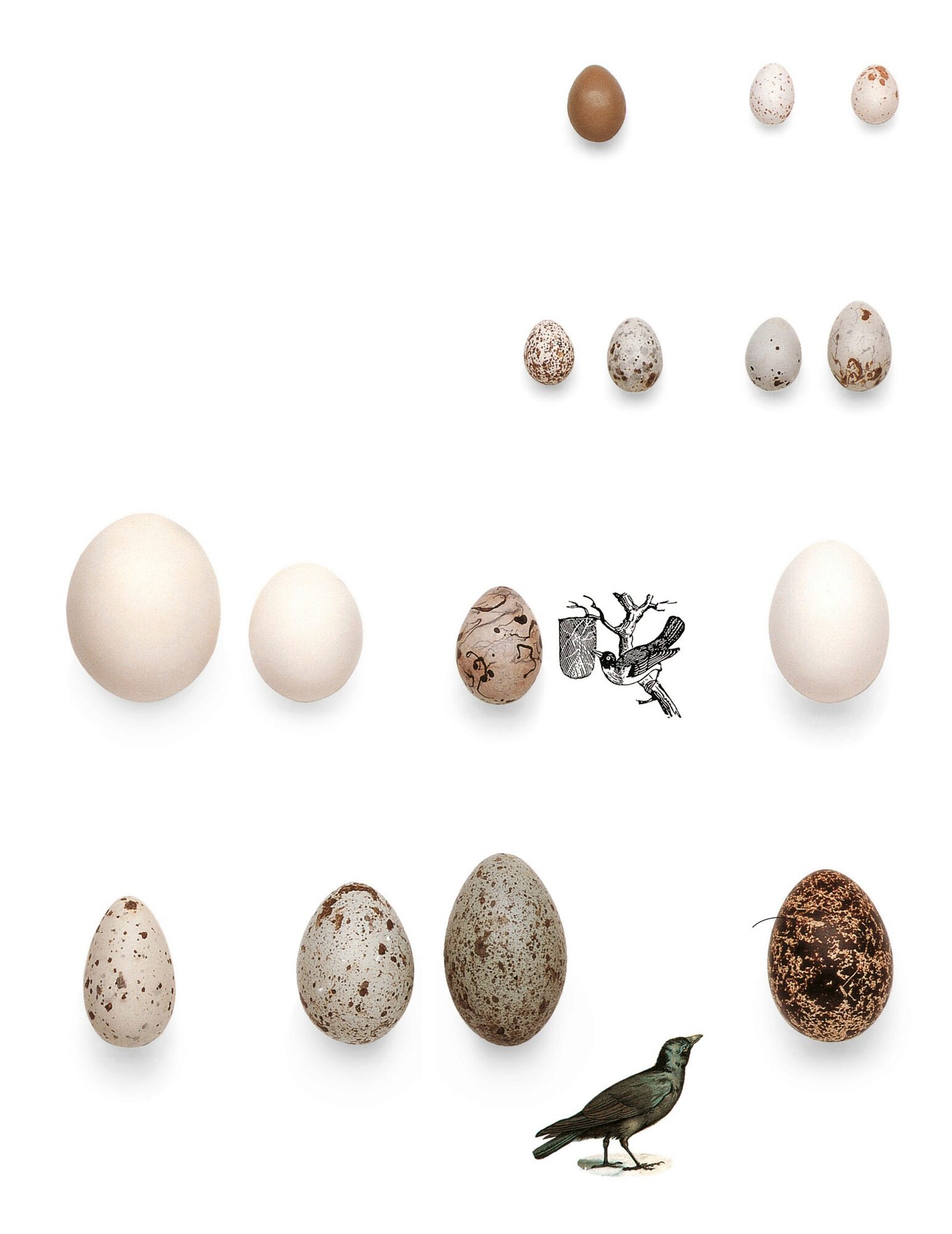
Eggs of
land birds
Small land birds, such as the seed- and
insect-eaters, lay small eggs, often in large
clutches. Large birds often lay far fewer
eggs. For birds such as eagles, one small
clutch a year is all they produce.
Some of the
museum specimens
here have lost their
original colour.
Well hidden
The nightingale’s brown
eggs are well concealed
in tangled bushes.
Tawny owl egg
Little owl
egg
Heavy clutch
Tits lay up to 15 eggs. Each
clutch weighs up to a third
more than the bird itself.
Wood
warbler egg
Marsh
warbler egg
Slow beginners
Some finches do not lay
their eggs until early
summer when more
seeds are available.
Summer visitors
Most warblers migrate to breed.
They time their arrival to
coincide with the annual insect
population explosion, which
provides food for the average
family of six nestlings.
Highly visible
Owl eggs are white with a
glossy surface. Their round
shape is typical of many eggs
laid in holes.
Streaks
The streaks on the Baltimore
oriole’s egg are formed only a few
hours before it is laid. The egg’s
pattern blends with the nest.
Baltimore oriole
Less to lay
Wood pigeons lay two
eggs that together
weigh less than a tenth
of the parent.
Chimney nest
The jackdaw lays
its eggs in holes –
in trees, rocky
outcrops, or
even chimneys.
Abnormal eggs
During the process of egg production, things
sometimes go wrong. A single egg may
have two yolks, or it may be of a
different size to a normal egg. The
eggs shown here are crow’s eggs.
Moorland
camouflage
Blotches of colour
help to hide this
grouse egg among
the heather.
Outsize
egg
Carrion
crow
Chaffinch
egg
Hawfinch
egg
Coal tit eggBlue tit egg
Normal
egg
Brown or
reddish spots